Choosing how to publish is a business and creative decision. Traditional publishing and self-publishing can both bring a book to readers, but they distribute responsibilities differently. Understanding those differences helps you choose a process that fits your priorities rather than following a route simply because it is familiar.
How traditional publishing generally works
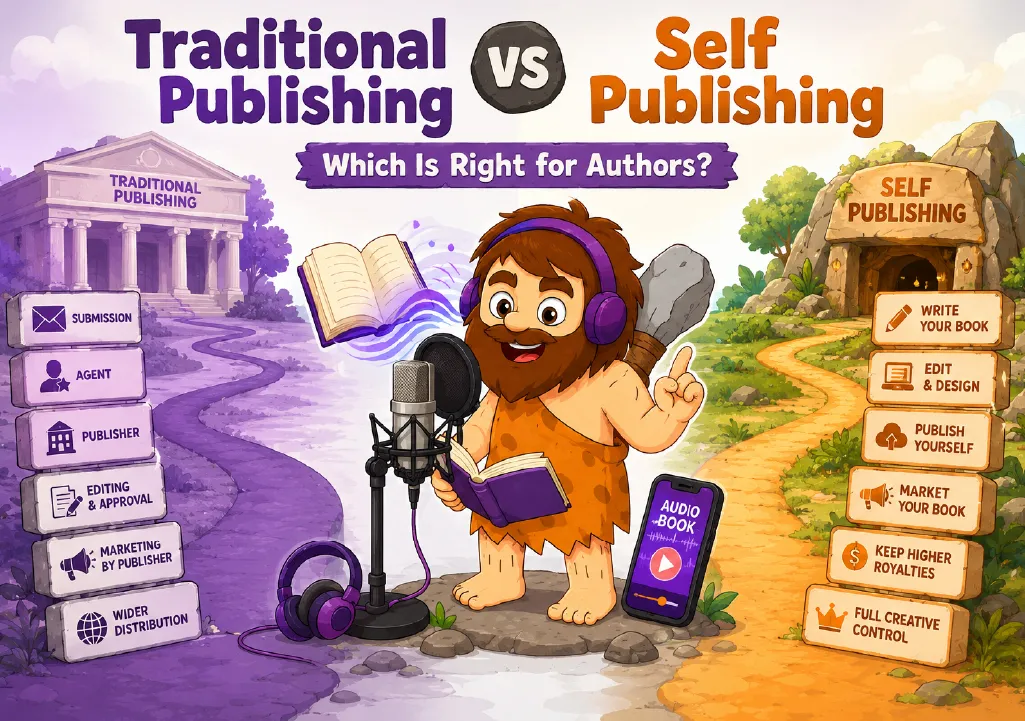
In a traditional arrangement, an author typically submits a proposal or manuscript to agents or publishers. If a publisher offers a contract, its team may coordinate editing, design, production, distribution, and some marketing. The exact services, schedule, rights, and financial terms vary by publisher and agreement; authors should review any contract carefully and seek qualified advice when needed.
This route can provide an established team and access to a publisher’s distribution relationships. It can also involve a competitive selection process, less control over timing and packaging, and a longer wait between acceptance and release.
How self-publishing generally works
With self-publishing, the author or their business makes the publishing decisions and arranges the work. That may mean hiring an editor, designer, formatter, and marketing specialists directly, or using a service provider to coordinate some tasks. The author retains more decision-making authority, while taking on more responsibility for budgeting, quality checks, and reaching readers.
Independent publication can offer a flexible schedule and direct control over presentation. Results depend on the author’s planning, the quality of the finished book, and the distribution and promotion choices made for it.
Compare the factors that shape your choice
Control and creative decisions
Ask how important it is to approve the cover, title, edits, formats, and release timing. Read agreements closely: the label of a publishing model alone does not tell you which rights or approvals you will keep.
Time and availability
Think about when you want the book to reach readers and how much time you can dedicate to submissions, production, or promotion. A faster route is not automatically easier; it may require the author to make more decisions in a shorter window.
Budget and financial terms
Compare likely expenses and payment structures, including editing, design, printing, distribution, and marketing. Review what a contract says about advances, royalties, fees, rights, and accounting, and avoid relying on broad promises without written terms.
Support and workload
List the skills and services you already have access to. Consider whether you want a team to coordinate parts of production or prefer to select each specialist yourself. Either way, clarify responsibilities before work begins.
A short decision exercise
- Write down your top three goals for the book.
- Rank control, speed, investment, reach, and hands-on involvement.
- Research realistic options that serve your genre and audience.
- Compare actual agreements and service details, not assumptions.
- Choose the approach you can support with a clear plan.
Make the route fit the project
Your decision can depend on the book, your experience, available resources, and what you want to do next as an author. Take time to ask questions, understand rights, and plan for professional quality. To explore independent production, see our publishing services; for help developing a manuscript, visit book writing.