
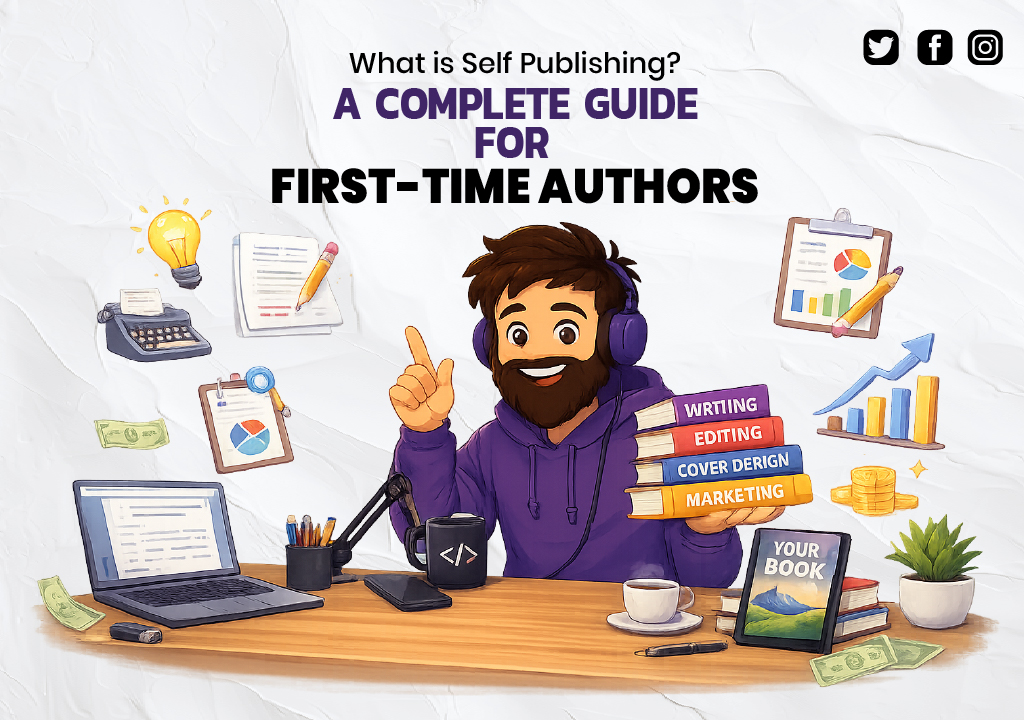
Self-publishing is a way to bring a book to market in which the author, often through their own publishing business, controls the publication decisions. The author may do some work personally and hire professionals for the rest. The term describes who leads the process; it does not mean that every task has to be completed without help.
What does an author manage?
The responsibilities usually cover several connected stages. The exact list depends on the type of book and the services you choose, but commonly includes:
- Preparing and editing the manuscript.
- Commissioning cover design and interior formatting.
- Selecting formats, distribution channels, and publication details.
- Reviewing proofs and checking the final product listing.
- Planning how readers will discover and purchase the book.
How does the process work?
Start with a finished, focused manuscript
Clarify who the book is for and what it offers. Complete the draft, seek appropriate feedback, and decide which editing stages it needs. A clear manuscript makes every later step—from cover direction to description writing—easier to plan.
Choose collaborators and services
Make a list of the expertise you need. Depending on the project, that may include developmental editing, copyediting, proofreading, illustration, design, formatting, or marketing. Request clear scopes, timelines, costs, and ownership terms before engaging a provider.
Prepare each edition
Print and digital editions have different production requirements. Cover dimensions, typography, images, and navigation should be reviewed in the format readers will use. Allow time to inspect proofs and fix issues before release.
Set up distribution
Distribution choices determine where a book can be listed or ordered. Compare the services available in your markets, their file requirements, metadata fields, payment terms, and update process. Check current policies before uploading or signing up because providers may change their terms.
Introduce the book to readers
Prepare an accurate description, author profile, and launch materials. Identify the places your intended readers already look for recommendations and focus your outreach there. Keep expectations realistic and plan how you will continue communicating after publication day.
Common misconceptions
“Self-publishing means doing everything myself.”
Authors can hire specialists or use services for production and planning. The important part is understanding who is responsible for each deliverable and retaining control over decisions that matter to you.
“Uploading a file is the whole process.”
Uploading is only one milestone. Editing, design, formatting, rights, metadata, quality checks, and reader outreach all affect how a book is received.
“There is one perfect platform for every book.”
Different services suit different audiences and formats. Compare their current reach and terms against your own publishing goals rather than choosing based on a general ranking.
Is self-publishing a good fit?
It may suit authors who value direct control and are ready to coordinate—or budget for—the work of publishing. If you prefer a publisher to lead more of the process, compare traditional options as well. Consider your goals, available time, investment, rights, and desired support before choosing.
For a step-by-step production overview, read our self-publishing checklist. You can also explore our book publishing services and contact us with questions about your project.